
September 25, 2026
What to Expect from Executive Coaching: A Roadmap for VP and C Suite Leaders
What happens in executive coaching? Anna Conrad explains goals, feedback, confidentiality, real-world practice, and progress for VP and C suite leaders.
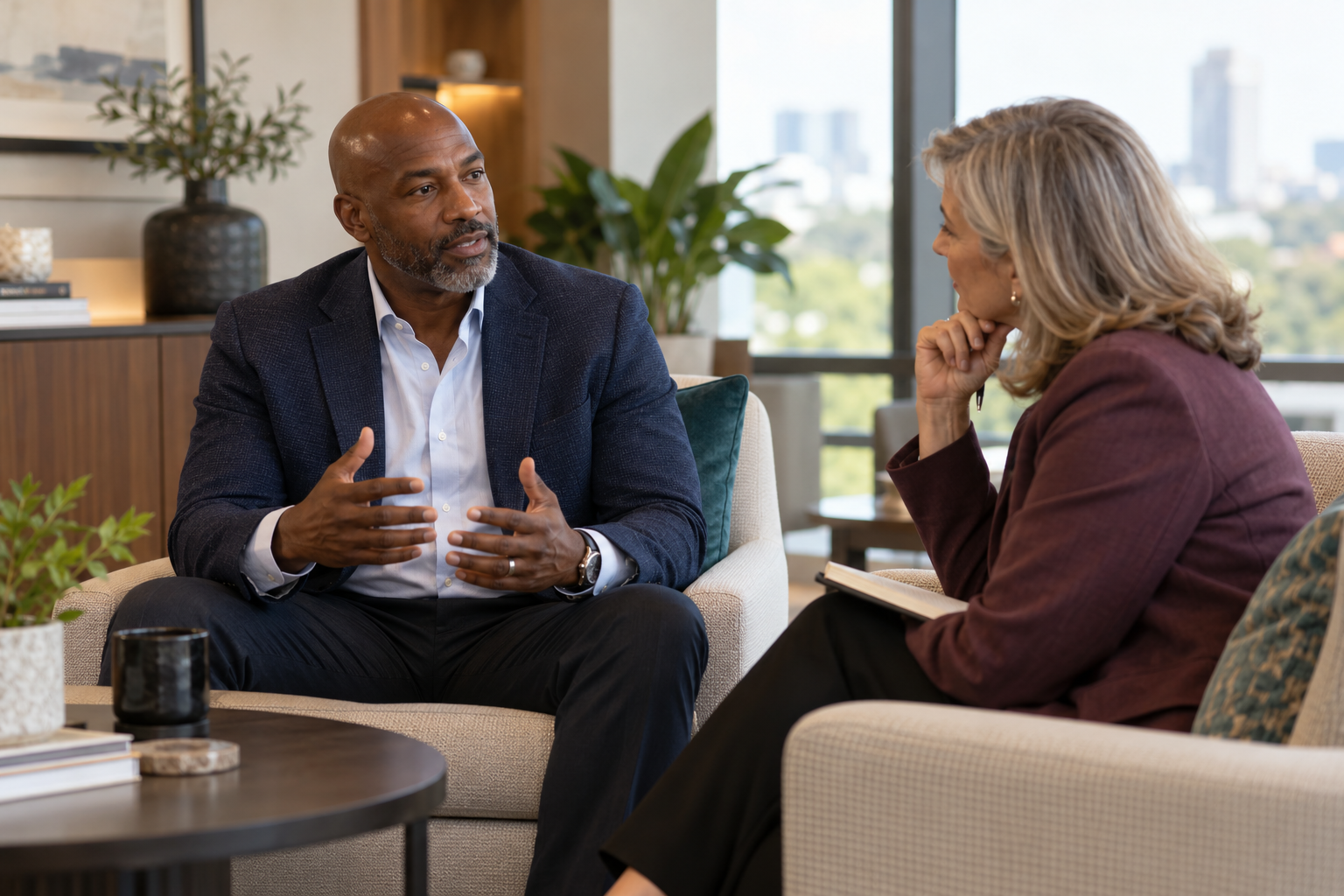
Your calendar is full. Your team needs decisions. Your peers need alignment. And somewhere between the budget review and the conversation you have been putting off, you are supposed to find time to become a more effective leader.
Executive coaching creates space to work on the leadership demands that rarely make it onto your calendar but affect nearly everything on it. For a vice president or C suite leader, that might mean stepping out of daily operations, strengthening influence across the organization, or preparing to lead at a level where your expertise alone is no longer enough.
If you have never worked with an executive coach, it is reasonable to wonder what actually happens. Here is how I approach the work.
First, we get clear about what needs to change
“I want to be more strategic” is a useful starting point. It is not yet a clear goal. What would being more strategic look like in your decisions, your calendar, and the way your team operates?
We begin by understanding your role, the expectations around it, and the situations that are creating friction. We also look at what is working. Development should build on your strengths while helping you recognize when you may be relying on them too heavily.
A leader who has built a career on solving problems, for example, may need to become more deliberate about which problems belong to someone else. Being exceptionally capable can create its own backlog.
We look at your leadership from more than one angle
Your intentions matter. So does the experience other people have of your leadership. Depending on the engagement, we may use stakeholder interviews, a 360 assessment, or other tools to understand both.
The purpose is to identify useful patterns. Do people trust your judgment but hesitate to bring you bad news? Do you see yourself as thorough while colleagues experience your communication as difficult to follow? Are you ready for broader responsibility, but still spending most of your time demonstrating how well you can handle the role you already have?
Feedback gives us something specific to work with. We discuss what fits, what needs more context, and which changes would make the greatest difference.
We agree on what progress will look like
Coaching goals should be clear enough that you and the people around you can recognize improvement. That might mean delegating decisions with clearer boundaries, making recommendations more concisely, addressing performance concerns sooner, or developing a successor who can take on more responsibility.
When your organization sponsors the engagement, we clarify its expectations as well. We agree in advance on confidentiality, what information may be shared, and how progress conversations will work. You should understand those boundaries before the work begins.
Sessions focus on the work you are actually doing
You do not need to set your real challenges aside to make time for coaching. Those challenges give us the material.
We might prepare for a difficult conversation with a peer, examine why decisions keep coming back to you, or work through how to present a recommendation to the executive team. We look at your assumptions, consider other perspectives, and decide what you will do differently.
Expect support and candid questions. A useful coaching conversation should help you see something more clearly and leave you better prepared to act.
The practice happens between sessions
Insight is satisfying. Changing a familiar response when the pressure is on takes practice. Between sessions, you might test a different way of opening a meeting, ask your team for recommendations before offering your own, or protect time for work that only you can do.
Then we review what happened. What worked? Where did you slip back into an old habit? What needs adjusting? The work becomes part of your leadership routine rather than another assignment competing for your attention.
We review progress and prepare you to sustain it
The length and rhythm of an engagement should reflect your goals and circumstances. Along the way, we revisit the original priorities, look for observable changes, and gather additional feedback where appropriate.
As the engagement concludes, we identify the practices, relationships, and accountability that will help you continue. My goal is for you to leave with stronger judgment and a clearer sense of how to lead through the challenges ahead.
Coach’s Tip
Before your first conversation with a coach, finish this sentence: “Six months from now, the people who work with me would notice that I…” Choose a behavior they could actually see. Your answer will tell us far more than “I want to improve my leadership skills.”
If you are considering executive coaching, you are welcome to reach out. We can talk through what you want to accomplish and whether coaching would be useful at this point in your leadership journey.
Explore executive coaching, or book a consultation.